









Screw Caps or Corks for Wine?by Fred Dame, MS
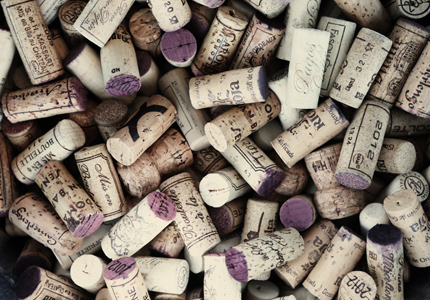
The hottest topic in the world of wine today isn't about vintages, varietals or locations. Mother Nature's legendary temper makes each year exciting for winemakers around the world. Yet it seems that one of her less obvious wonders has taken precedence — that wonderful tree bark known as cork. And the question on our minds is: To screw or not to screw? That
nasty little infection 2,4,6-Trichloranisole (TCA) has made its mark. The contamination happens during the cork
sterilization process, so little can be done to halt it other than
careful bark selection and a lot of inspection. Unfortunately, the cork
industry has been very slow to respond to winemakers' demands for
quality. As a result, we are seeing more Stelvin-type closures, also
known as screw caps. Don't worry, it's not happening overnight — although
Switzerland already uses more than 15 million annually. In the United
States, usage could reach 10 million this year. More are Switching Over A
significant number of highly-regarded wineries in the United States
are taking the plunge. Plumpjack has been bottling 50 percent of
their reserve production in Stelvin.
Look for Calera, Argyle and Sonoma-Cutrer to join in
on the action. Everyone seems to agree that the Stelvin closure is currently the best alternative
to cork. Don't expect to see the revolution
to impact the United States as quickly as it has Australia and New
Zealand though. The cork offers tradition and a proven track record.
There are numerous other projects under way in an attempt to find
a better solution that may be successful. Traditional May Still be Better So what is the hold-up? Why not just order up those caps and bottling machines and get to work? There are still a number of issues on the table. Without doubt, the main argument is over the issue of aging. While, the cork has a wonderful ability to let the wine breathe, no one knows how screw caps will react to long periods of aging. There have been incubation experiments and short-term experiments. In an article by Carol Emert in the San Francisco Chronicle, she describes a blind tasting of the 1998 Plumpjack Reserve in cork and cap. That's about as far as anyone in this country has gone, and the results were mixed. For the moment, the logical thinking would be that for near-term consumption, screw caps are just fine, while for aging, cork is it. However, how much of an issue is cellaring in the 2000s? The majority of wine consumed in this country is drank within eight hours of its purchase — and that majority is probably in the neighborhood of 95 percent. Most new homes are built without cellars anyway, which makes storage space a real problem. We happen to own two refrigerators and a 500-bottle cooler for home consumption. Even then, there are boxes and bottles sitting around. It's an expensive proposition. There are new companies, such as San Francisco's Vintrust, that are making storage management a significant industry. In
the world of hospitality and wine service, there is a hot debate that is making sommeliers, restaurant owners and waitstaff
a little nervous. We all know and understand the ritual of the cork,
but screw caps? Remember all those wonderful jokes about screw caps
and brown bags? We think the simple notion that wine has a casual
side may actually benefit the wine industry in its ongoing battle
with liquor and beer interests. It could even be fun! Related Content:
|

Sip on GAYOT's picks of the best small-production craft beers.

Sip straight or mix up a margarita with GAYOT's picks of the best tequilas under $100.
 Facebook
 (formerly Twitter)
 Instagram